
Bridges in Flat Rock
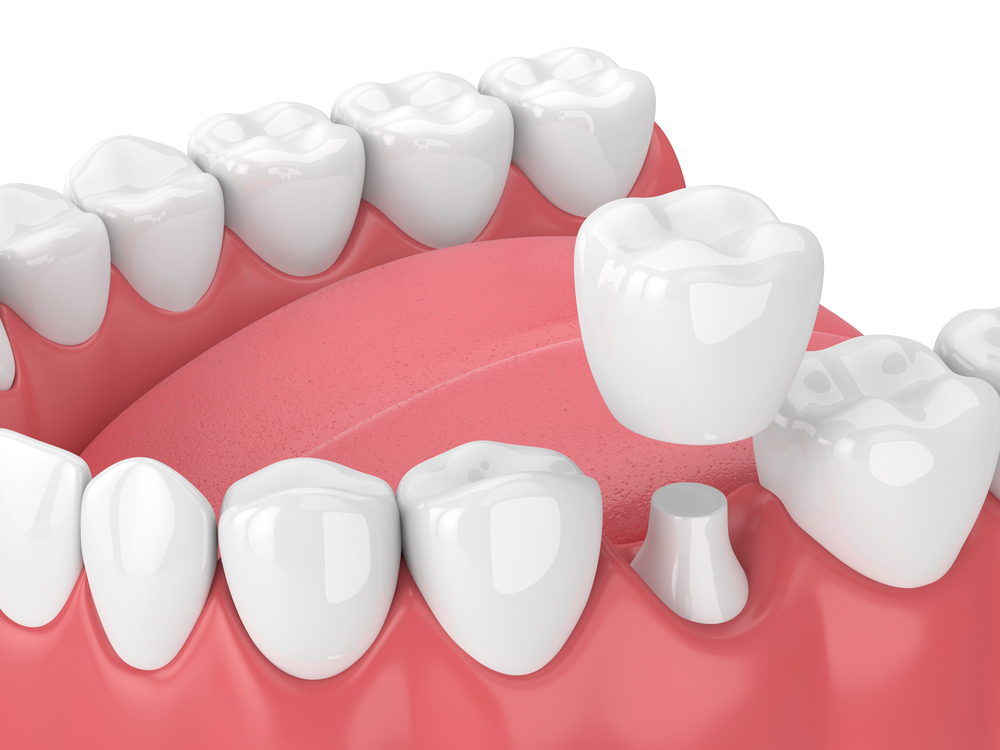
A missing tooth rarely stays a cosmetic issue for long. Chewing shifts to one side, nearby teeth start to drift into the open space, and simple things — biting into a sandwich, smiling in a photo, pronouncing certain words — begin to feel different. For many of our Flat Rock patients, a dental bridge is the straightforward fix: a fixed restoration that fills the gap, restores biting strength, and looks like a natural part of the smile. Our office at 22500 Allen Rd. in Woodhaven is an easy trip for Flat Rock families, and with five doctors on our team plus an on-site dental lab, we can move from first exam to finished bridge without long waits between steps.
A bridge replaces one or more missing teeth by anchoring a replacement tooth — called a pontic — to the healthy teeth on either side of the gap. Those neighboring teeth are shaped and fitted with crowns, and the whole unit is cemented into place as one solid piece. Unlike a removable partial denture, a bridge stays put. You brush it, eat with it, and otherwise live with it as part of your bite.
Most people considering a bridge are missing a single tooth or a short run of teeth, with sound teeth on either side. Candidacy depends on the health of those supporting teeth and the gum tissue around them, which is why we start with a full exam, X-rays, and an honest conversation about options. If gum disease is present, we may recommend scaling and root planing or periodontal treatment first so the foundation is stable. If the supporting teeth aren't strong enough, we'll talk through alternatives we also offer, including dental implants, implant-supported dentures, and partial dentures. Every Flat Rock patient gets a complimentary consultation, so there's no cost to find out which path fits.
- Restored chewing so you can eat comfortably on both sides again
- A natural-looking replacement tooth matched to your surrounding smile
- Support for neighboring teeth, which tend to tip or drift into an open space over time
- A fixed solution — nothing to take out at night or soak
- Help maintaining clear speech and normal facial support
- Protection for teeth that already need crowns, since those crowns do double duty as bridge anchors
For patients who've lost a tooth to decay, injury, or an extraction, a bridge often solves several problems at once. If a neighboring tooth already has a large filling or a cracked cusp, covering it with a crown as part of the bridge strengthens it while anchoring the replacement. We'll explain exactly which teeth are involved and why before any work begins.
What the Process Looks Like
Treatment usually starts with an exam and X-rays to confirm the condition of the anchor teeth and the bone and gums beneath. If a tooth still needs removing, we handle simple and surgical extractions in-house, and we offer nitrous oxide and IV sedation for patients who feel anxious about dental work. Some sites need healing time or bone grafting before restorative work moves forward; we'll map out that timeline clearly.
At the preparation appointment, we numb the area, reshape the anchor teeth to make room for the crowns, and take impressions or scans. You leave with a temporary bridge so you're never walking around with a visible gap. Our in-house lab then fabricates the final bridge, which keeps communication direct between our doctors and our lab technicians — shade, shape, and bite can be fine-tuned without shipping cases out. At the delivery visit we check the fit, adjust the bite until it feels right, and cement the bridge permanently.
Caring for Your Bridge Afterward
A bridge is cleaned a little differently than natural teeth. Because the pontic sits above the gum rather than in a socket, you'll clean underneath it daily using floss threaders, super floss, or a water flosser. Our hygienists walk Flat Rock patients through the technique at delivery and reinforce it at each cleaning. Regular exams and cleanings matter more than ever, since the long-term success of a bridge depends on keeping the anchor teeth and gums healthy. If you grind at night, we can make a night guard in our lab to protect your investment.
Insurance, Membership, and Financing
We accept all major PPO insurance plans and will run a complimentary benefits check before treatment so you know your estimated share up front. We also welcome self-pay patients and accept cash, checks, Visa, Mastercard, and American Express.
Without insurance, our in-house membership plan is $199 a year for adults and $99 for patients 17 and under. It covers exams, X-rays, two cleanings, and two fluoride treatments at 100%, with 20% to 50% off other treatment — no deductibles, no waiting period, no annual maximum. CareCredit financing is available to spread payments out. Se habla español.