
Services
Bridges
We fill the gap from missing teeth with custom bridges, crafted and fine-tuned in our on-site dental lab.

Why choose us
Benefits of Bridges
Fill The Gap
A bridge replaces one or more missing teeth so you can chew and smile comfortably again.
Crafted On Site
Our in-house dental lab makes and adjusts your bridge right here in Woodhaven.
Natural-Looking Results
We shape and shade your bridge to blend with the teeth around it.
Comfort Comes First
Blankets, warm towels, neck pillows, headphones and Netflix are yours for the asking during every visit.
Affordable Options
We accept major PPO plans, offer CareCredit financing and an in-house membership plan for patients without insurance.
A missing tooth rarely stays a single problem for long. The neighboring teeth begin to tip toward the gap, the opposing tooth can drift down or up, and chewing shifts to one side out of habit. A dental bridge addresses all of that at once by filling the space with a replacement tooth that's anchored to the teeth on either side — so your bite stays where it belongs and you can eat on both sides again.
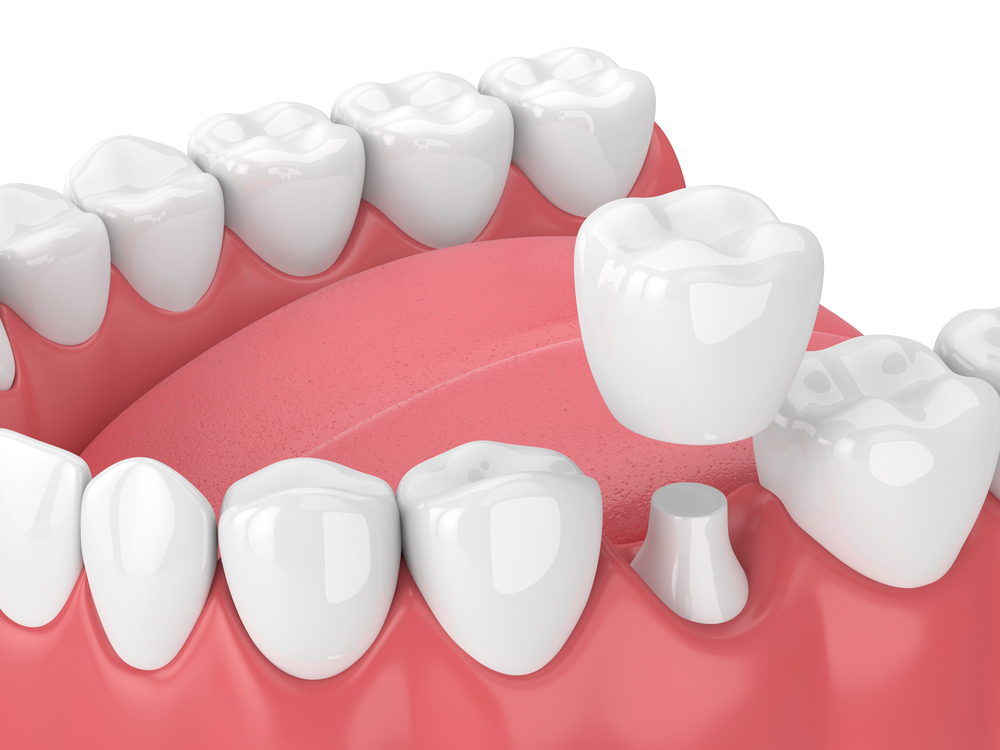
A bridge is a fixed restoration, meaning it stays in your mouth and isn't taken out at night. The replacement tooth in the middle is called a pontic, and it's supported by crowns that fit over the healthy teeth bordering the gap. Those supporting teeth are shaped so the crowns seat properly, impressions or scans capture the details of your bite, and the finished bridge is cemented into place as one solid unit.
Because it relies on neighboring teeth for support, a bridge is a good fit when those teeth are sound and well-rooted. It's often the right choice for a single missing tooth, and in some cases for a short span of two. Patients who have already had a crown on a tooth next to a gap sometimes find a bridge especially practical, since that tooth was going to be restored anyway. If the adjacent teeth aren't strong enough — or if you'd prefer not to involve them — we'll talk through dental implants, implant-supported dentures, or partial dentures, all of which we provide here as well.
Planning starts with an exam and X-rays so we can see the roots, the bone, and how your teeth come together. We check the health of the teeth that would support the bridge, look for decay or gum issues that need attention first, and consider the shape of the gap itself. If a tooth still needs to come out, that's something we handle in-house through our oral surgery services, and we'll discuss the right amount of healing time before restoring the area.
Some patients come to us after years of leaving a space alone; others are deciding what to do before an extraction. Both situations are worth a conversation, and we offer a complimentary consultation so you can get answers without committing to anything. Here's what we typically review together:
- The condition of the teeth on either side of the gap and whether they can support a bridge
- How the missing tooth is affecting your bite, chewing, and speech
- Whether a bridge, an implant, or a partial denture better fits your situation
- Shade and shape, so the new tooth blends with the teeth around it
- Your insurance benefits, membership plan coverage, or financing options
How our in-house lab shapes the experience
Allenwood Dental has a dental lab on site, which changes the rhythm of restorative work in ways patients notice. Crowns, dentures, night guards and other appliances are made and adjusted right here at 22500 Allen Rd. in Woodhaven, and that proximity means fit and shade conversations happen directly rather than through shipping and waiting.
It also means adjustments are straightforward. If a bridge feels slightly high when you bite down, or a contact point needs refining, we can take care of it without sending work out. Comfort matters throughout the appointment too — our comfort menu includes blankets, warm towels, neck pillows, headphones, Netflix and refreshments, and nitrous oxide sedation is available for patients who'd like help relaxing during treatment.
Caring for your bridge after it's placed
A bridge is cleaned differently than a natural tooth because the pontic sits above the gum rather than in it. Flossing underneath it with a threader, a floss designed for bridges, or a water flosser keeps the area beneath the replacement tooth free of buildup. Brushing twice a day and paying attention to the gumline around the supporting crowns protects the teeth doing the heavy lifting.
Regular cleanings and exams with our hygienist let us check the margins of the crowns and the health of the gums over time. If you grind your teeth, we may recommend a night guard — also made in our lab — to reduce wear on the restoration. Keeping up with routine visits is the most reliable way to get long service from the work.
Paying for treatment
We accept all major PPO insurance plans and offer a complimentary benefits check so you know your coverage before treatment begins. For patients without insurance, our in-house membership plan is $199 a year for adults and $99 for ages 17 and under, with no annual maximum, no deductible, no waiting period, and 20% to 50% off treatment beyond the covered preventive care.
CareCredit financing is available for patients who'd rather spread payments out, and we accept cash, checks, Visa, Mastercard and American Express. Se habla español.
If a missing tooth has been bothering you, we'd be glad to take a look. Call our Woodhaven office to schedule — we see patients from Trenton, Riverview, Flat Rock and throughout the area, and same-day emergency visits are available when you need them.
The process
What to expect
- 1
Complimentary Consultation
We examine your teeth and gums, review your options for replacing missing teeth and answer your questions at no charge.
- 2
Preparing Your Bridge
We shape the supporting teeth, take impressions and work with our on-site lab to build a bridge that fits your bite.
- 3
Fit And Follow-Up
We place your bridge, fine-tune the fit and show you how to clean around it so it lasts.